Sector: Government/Public Safety
Location: Manayunk Canal, Philadelphia, PA | Owner: City of Philadelphia Water Department | Cost: $16.3 Million | Completion: 2025

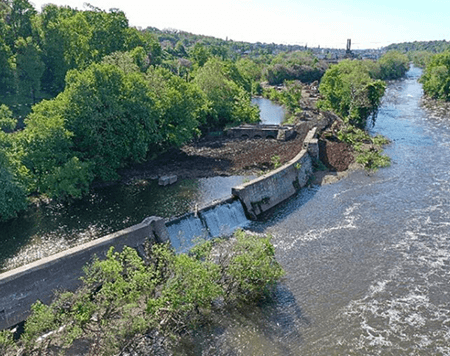
Details: The Manayunk canal, which connects to the Schuylkill River, one of Philadelphia’s primary water sources, is a part of a significant waterway for the city. The Flat Rock Dam Betterment Project, led by the Philadelphia Water Department (PWD), was a landmark initiative that reconnected the historic Manayunk Canal to the Schuylkill River for the first time in over 75 years. This restoration effort marks the culmination of three decades of planning, scientific research, and community collaboration.
JBC Associates supported the project under two service agreements:
- JBC’s Senior Scheduler worked diligently with the Designer of Record to review the Contractor’s schedule and verify that the Contractor was meeting the contract requirements, finishing within the limits of the contract, and working to reduce potential schedule issues.
- JBC provided daily Construction Inspection verifying that specifications were followed and work was installed correctly.
“This was such a unique opportunity for JBC Associates. It was a great opportunity to work side by side with the designer, Philadelphia Water Department and the Contractors to build a project that won’t just benefit Philadelphia and the Manayunk community today but for many years to come,” said JBC’s Senior Scheduler, Rebecca Levan, EIT.



Reviving a Historic Waterway
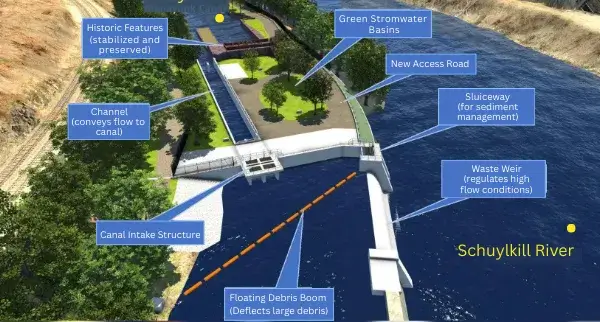
The canal once served as a route for commerce to travel between Philadelphia and upstream coal regions some 90 miles away and helped make Philadelphia “the workshop of the world,” according to Adam Levine, a historical consultant to the Water Department. Closed to navigation in the 1940s; as railroads replaced boat transportation, the Manayunk Canal had long been cut off from freshwater flow. City crews excavated the sediment and restored the vital connection to the canal that originally existed, improving water quality and supporting aquatic life. The work included building new structures to connect the waterways, improving existing structures and the addition of green infrastructure to manage stormwater. At the intake structure, two gates allow water to enter the canal at controlled rates to reach desired oxygen levels. Historic preservation at the Feeder Gate House building was central to the effort, with the 1916 gatehouse at Lock 68 stabilized and enhanced through masonry repairs and the installation of historic artifacts.
The project involved extensive civil and environmental engineering work. JBC’s inspection team oversaw critical components including:
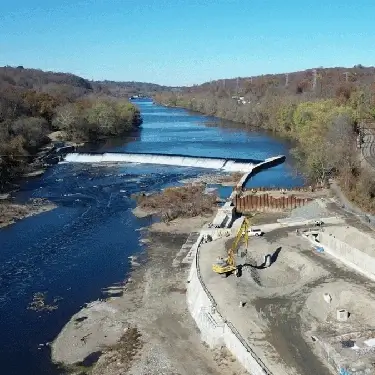
- Demolition of a portion of the existing dam, including the spillway
- Installation of rock anchors to support the foundation of the new structure
- Construction of a new spillway and sluiceway to manage water flow and sediment
- Construction of a new intake structure with two gates to regulate canal flow
- Installation of a sluiceway gate for sediment control
- Construction of a concrete channel to convey water from the river into the canal
- Base construction of access roads to support site logistics
- Grading and foundation installation for three rain garden basins to manage stormwater
- Removal of concrete and steel cofferdams used during construction
The new infrastructure allows for better regulation of water flow, enhancing oxygen levels and reducing pollutants. Nearly 20 species of freshwater mussels will be introduced to naturally filter the water and boost oxygenation. A historic lock structure, towpath and gate house, among other historical elements, were preserved throughout the project’s implementation and are on display for visitors to see.
“This is one of the most hopeful and amazing projects I’ve worked on. To see these improvements directly impacting the quality of drinking water for my family is really impactful.” said Kelly Anderson, Director of PWD’s Office of Watersheds.
The Flat Rock Dam Betterment Project not only strengthens Philadelphia’s infrastructure but also restores a cherished waterway that once fueled the city’s industrial revolution.
Government/Public Safety Projects




 Browse Our Work

